
At Rady Creek, BC's ambitions for outdoor tourism and recreation are colliding with the way it manages resource roads - and exposing a policy gap that could affect backcountry access across the province.
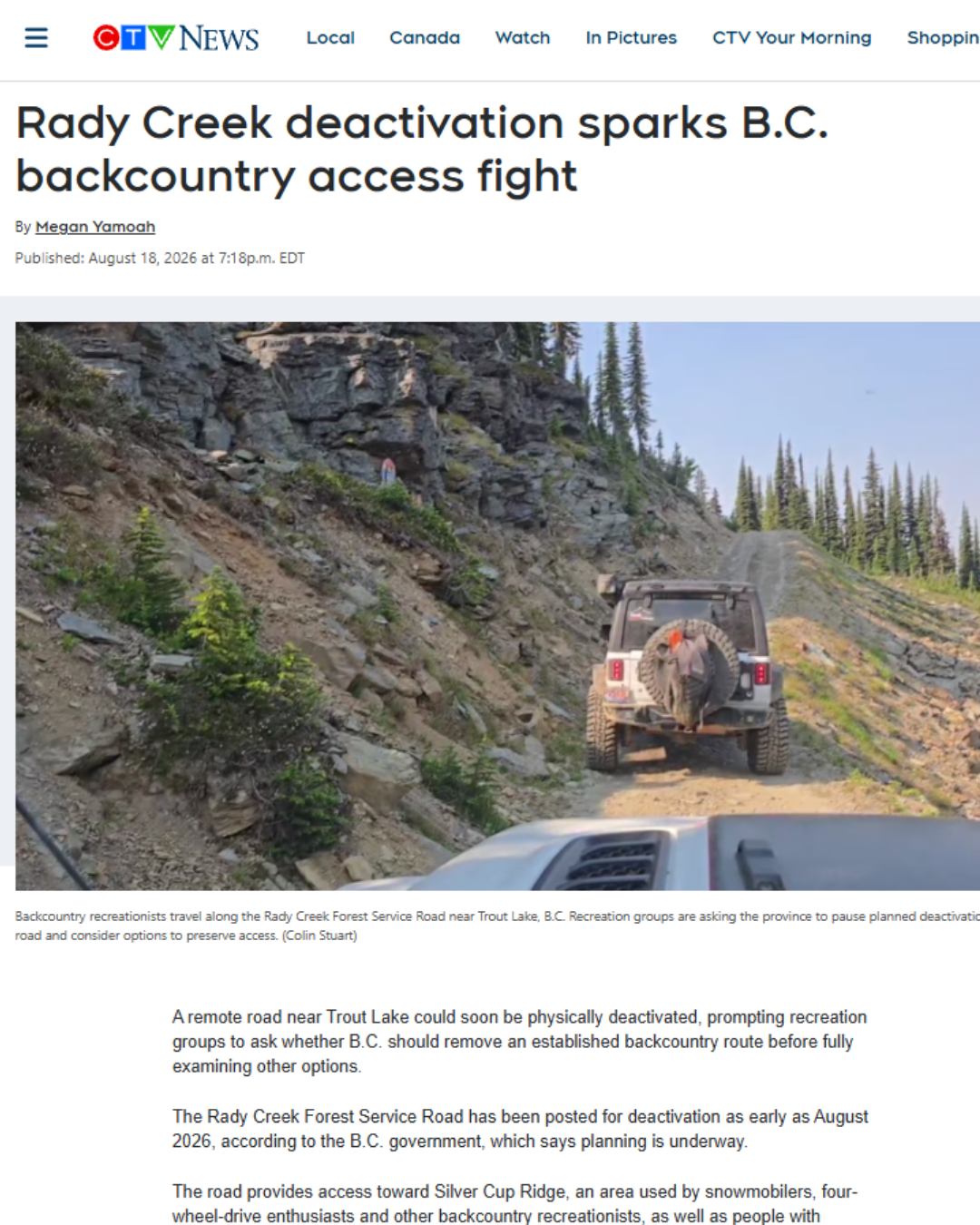
On August 18, CTV News reported on the fight over the proposed deactivation of Rady Creek Forest Service Road near Trout Lake.
At the time, the Province said an application to manage a recreation trail over Rady Creek was under review, with a decision expected in the fall.
The following morning, that application was declined.
Two days later, the Ministry of Forests confirmed it intends to proceed with deactivation.
If you're just catching up, start with the CTV story. It explains what's at stake at Rady Creek and why recreation organizations have been asking government to pause before permanently altering the corridor.
What has happened since makes the bigger problem increasingly difficult to ignore.
Rady Creek Has Exposed the Gap
Recreation Sites and Trails BC stated they declined the Trout Lake Recreational Club's application because its authority to authorize recreation trails generally does not extend to resource roads such as Forest Service Roads.
BC already has a Partnership Agreement system that allows recreation organizations to manage public recreation infrastructure. But while a corridor remains a resource road, that pathway may not be available. The alternative being suggested, a Land Act Licence of Occupation, could instead leave volunteer non-profit organizations responsible for infrastructure developed and managed for industrial use.
Neither provides what is actually needed: a transition.
When industrial requirements change but recreation value remains, BC needs a way to determine whether existing road prisms, bridges, drainage and other infrastructure can transition to standards, responsibilities and liability appropriate for recreation.
Recreation organizations should not have to become industrial road managers simply to preserve public access. Nor should useful infrastructure have to disappear before its future recreation value can be considered.
And this problem reaches much further than Rady Creek… or snowmobiling.
The Road Is Often the Access to Everything Beyond It
BC's snowmobile clubs alone maintain more than 18,000 kilometres of trails and 90 recreation sites across the province, much of it on the same working landscape as forestry, mining and other resource activity. But the implications of resource-road policy extend far beyond motorized recreation.
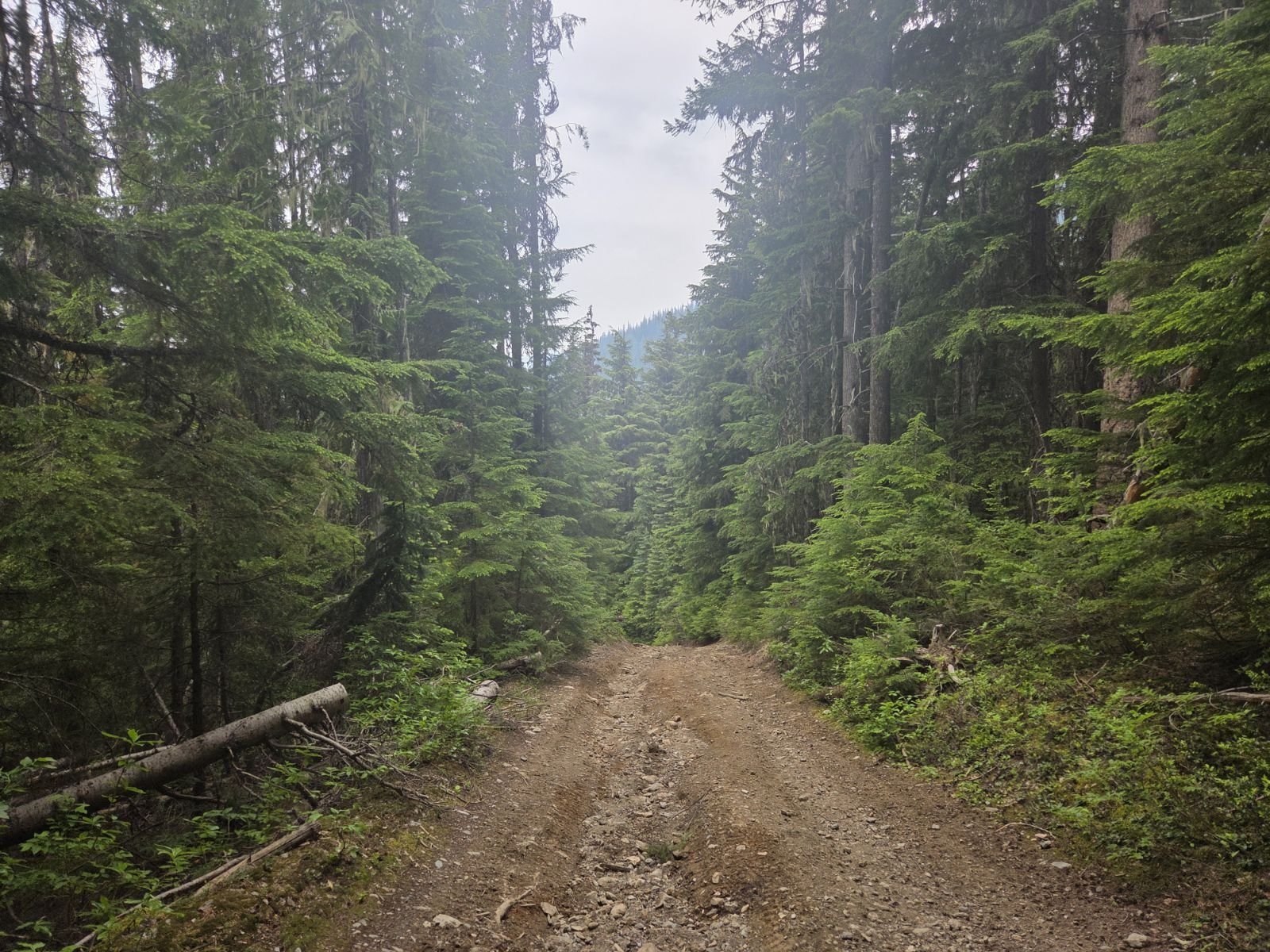
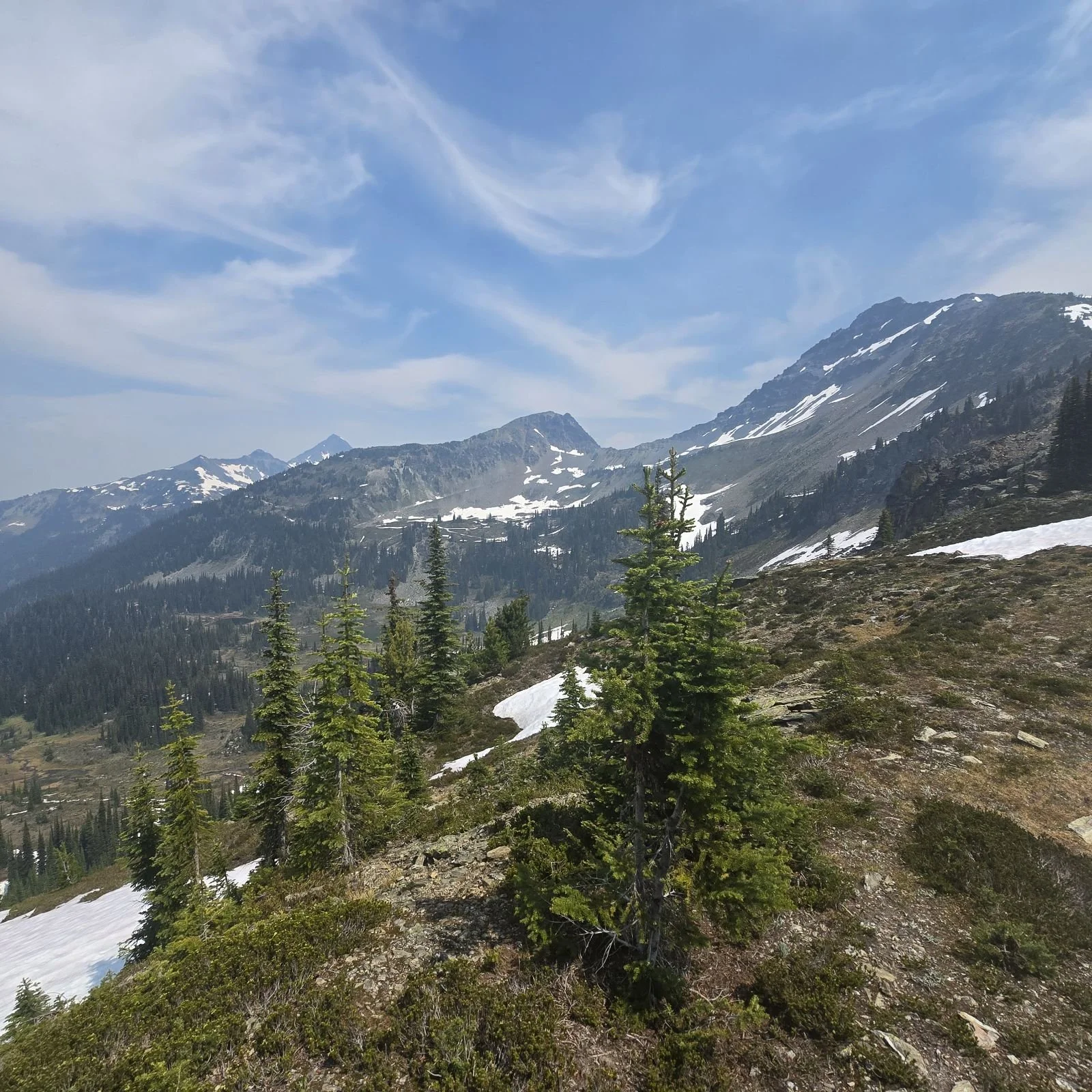
Across BC, resource roads are often what make the backcountry accessible in the first place. They take hikers to trailheads, anglers to lakes and rivers, hunters into the backcountry, families to campsites and recreationists to the places where their adventures begin. When those roads are significantly deactivated, the impact can extend far beyond the kilometres of road being removed. Adding substantial distance to reach a trailhead, lake or recreation area can put an entire network beyond the practical reach of many British Columbians.
That access carries particular weight in rural communities. Places like Trout Lake don't have the same pools, recreation centres and other public amenities found in larger centres. The trails, lakes and backcountry are their recreation infrastructure - places where residents gather, stay active and enjoy the outdoor lifestyle that has become inseparable from how British Columbia sees and promotes itself.
Protecting access isn't simply about where visitors can go. It is about whether rural British Columbians can continue to access their own backyards, and whether communities can continue to benefit from the recreation and tourism opportunities those landscapes support.
BC's Economy Is Changing. Our Infrastructure Policy Needs to Keep Up.
The economic stakes are significant too.
Tourism generated $23 billion in revenue in BC in 2024 and contributed nearly $8 billion to provincial GDP - more than each of BC's primary resource industries individually. It directly supported more than 113,000 jobs and nearly 17,000 tourism businesses.
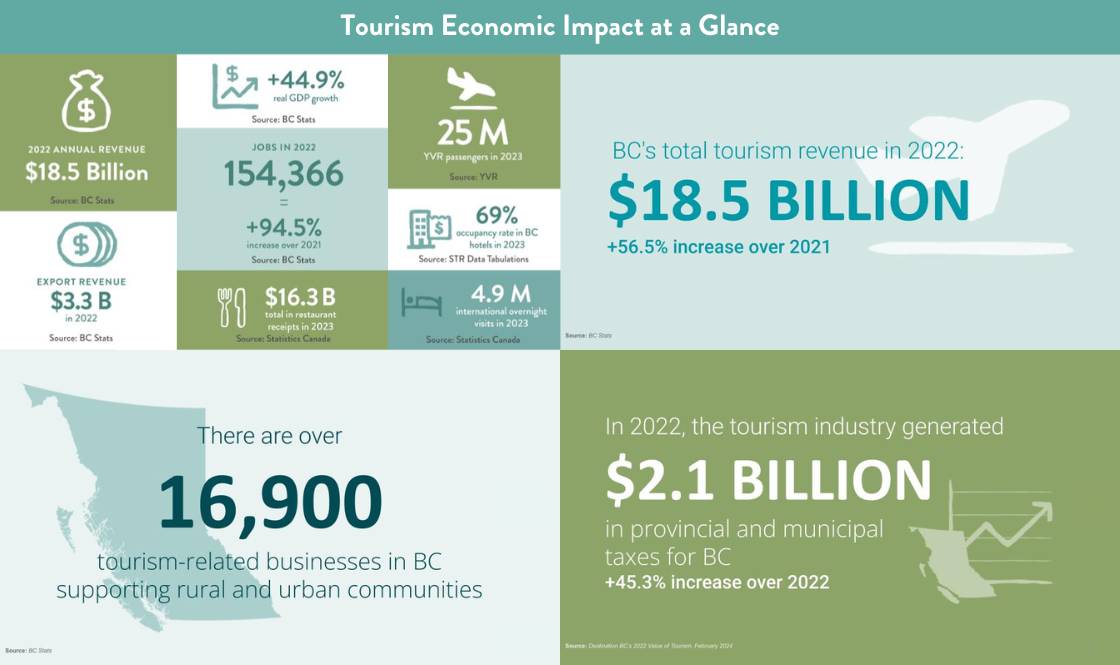
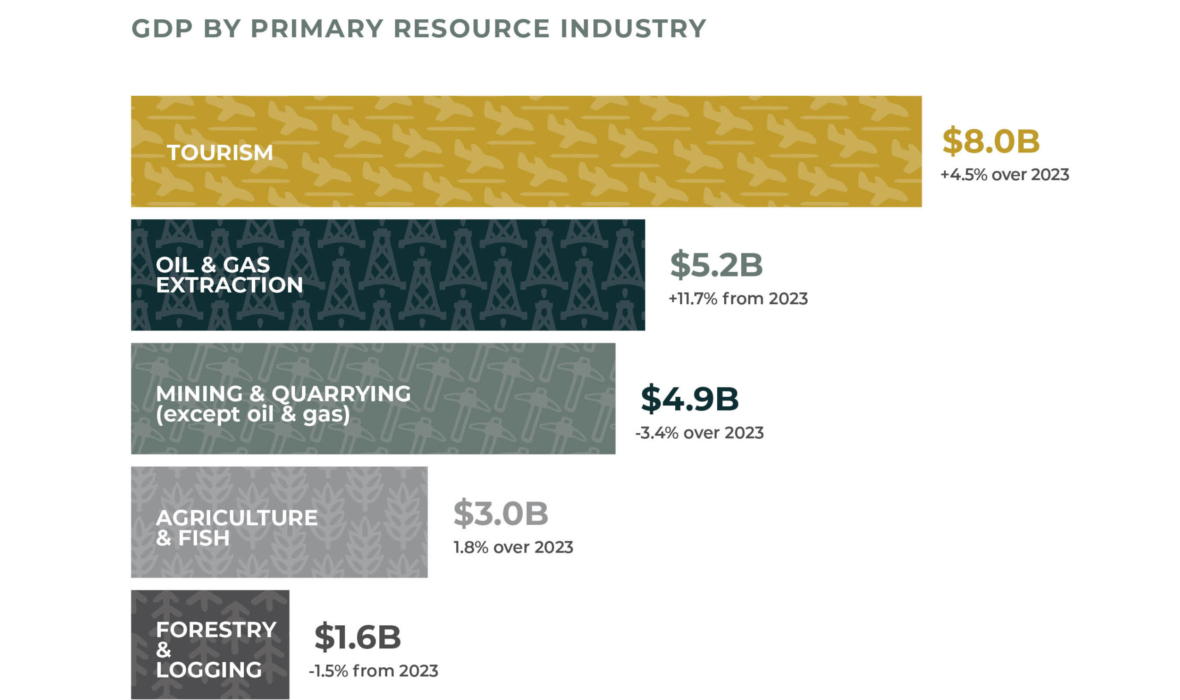
The Province intends to grow that contribution. Its 2026 Look West: Tourism Sector Action Plan aims to double tourism revenue by 2036 and positions tourism as a key driver of economic diversification and growth, including in smaller, rural and remote communities.
At the same time, BC's Outdoor Recreation Strategy calls for “a modernized framework for high-value recreation access and resource roads.” The Province acknowledges that tourism recreation access depends heavily on resource roads, that these roads now serve a much broader public role, and that shifts in industrial road management require new solutions.
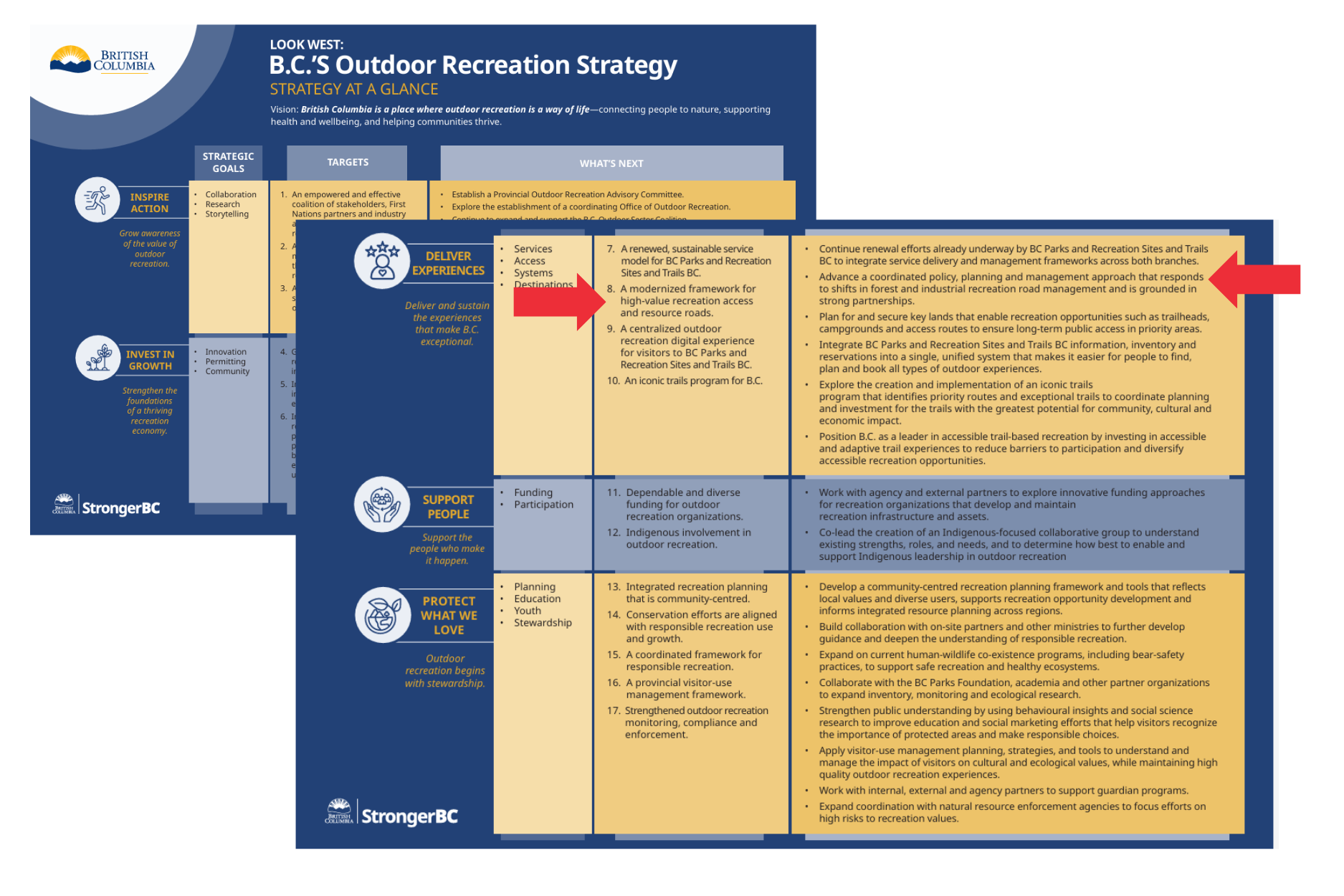
Rady Creek is where those commitments meet reality.
The BCSF is not arguing that recreation should take precedence over resource industries. We are supporting the government’s own statement that as the economic and public use of the landscape changes - and infrastructure policy needs to be capable of changing with it.
Infrastructure developed for one economic purpose can continue to have considerable value as its original requirements change. In rural BC, that can mean supporting residents' quality of life while providing the access on which tourism businesses and entire recreation networks depend.
Sometimes deactivation will still be the right answer. Environmental and geotechnical concerns, Indigenous interests, public safety, other land uses, costs and management capacity all need to be considered.
But before irreversible work occurs, BC needs to ask:
Does this corridor still have significant public value; and if it does, can it responsibly transition?
Rady Creek gives us somewhere to start.
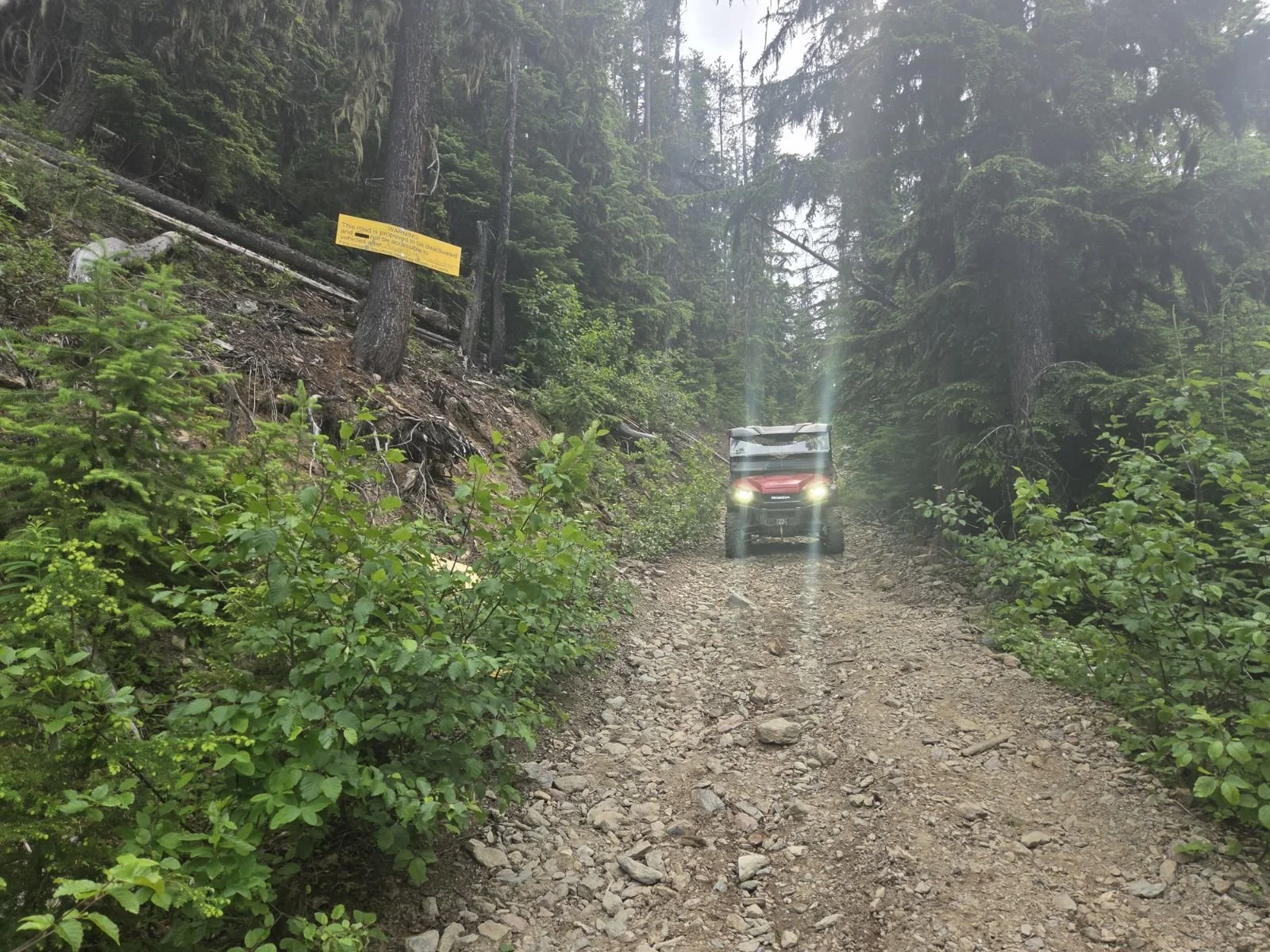
So Why Are We Still Deactivating Rady Creek?
The BCSF has been raising the broader resource-road access issue across government for years. It touches recreation, tourism, environment, economic development, land use and resource management.
But a resource-road transition cannot happen without the ministry responsible for that infrastructure at the table: the Ministry of Forests.
The BCSF has repeatedly asked the Ministry to pause significant physical deactivation at Rady Creek while alternatives are meaningfully explored. On Friday, the Ministry of Forests confirmed that it intends to proceed.
That creates the contradiction at the heart of Rady Creek: proponents are being directed toward possible alternatives while the infrastructure they are trying to preserve remains scheduled for deactivation as early as August 24.
We are not asking the Ministry of Forests to ignore legitimate environmental or geotechnical concerns, nor are we asking it to solve BC's resource-road policy alone.
We are asking it to come to the table before irreversible work removes the opportunity to find a solution.
Pause significant physical deactivation. Bring together the necessary areas of government, recreation organizations, affected tenure holders and technical expertise. Review the alternatives and determine whether Rady Creek can responsibly transition.
Because without a transition process, this will not end at Rady Creek.
We can build the process once - or fight the same battle road by road across British Columbia.
This Is Where You Come In
Rady Creek may be nowhere near where you recreate. The problem it has exposed could be.
CTV News has brought this issue to a provincial audience, and keeping public attention on it matters.
Whether you snowmobile, hike, hunt, fish, ATV, camp, ski, bike, or simply value access to BC's outdoors, we're asking you to do two things:
Read the CTV story. Then share it.
Share it with your club, your community, your riding partners or your hiking friends. Share it with someone who has never heard of Rady Creek but understands what it would mean to lose practical access to a favourite lake, trailhead, campsite or backcountry destination.
Every read and every share helps show that Rady Creek is not simply one road-management decision. It is a test of how British Columbia will manage recreation access as the needs of our working landscape change.
Read and share the CTV News story on Rady Creek
Let's get the policy right before we lose the opportunity.