
We put four questions about backcountry access, recreation funding and land-use decisions to BC's political parties and candidates. Here's what they told us.
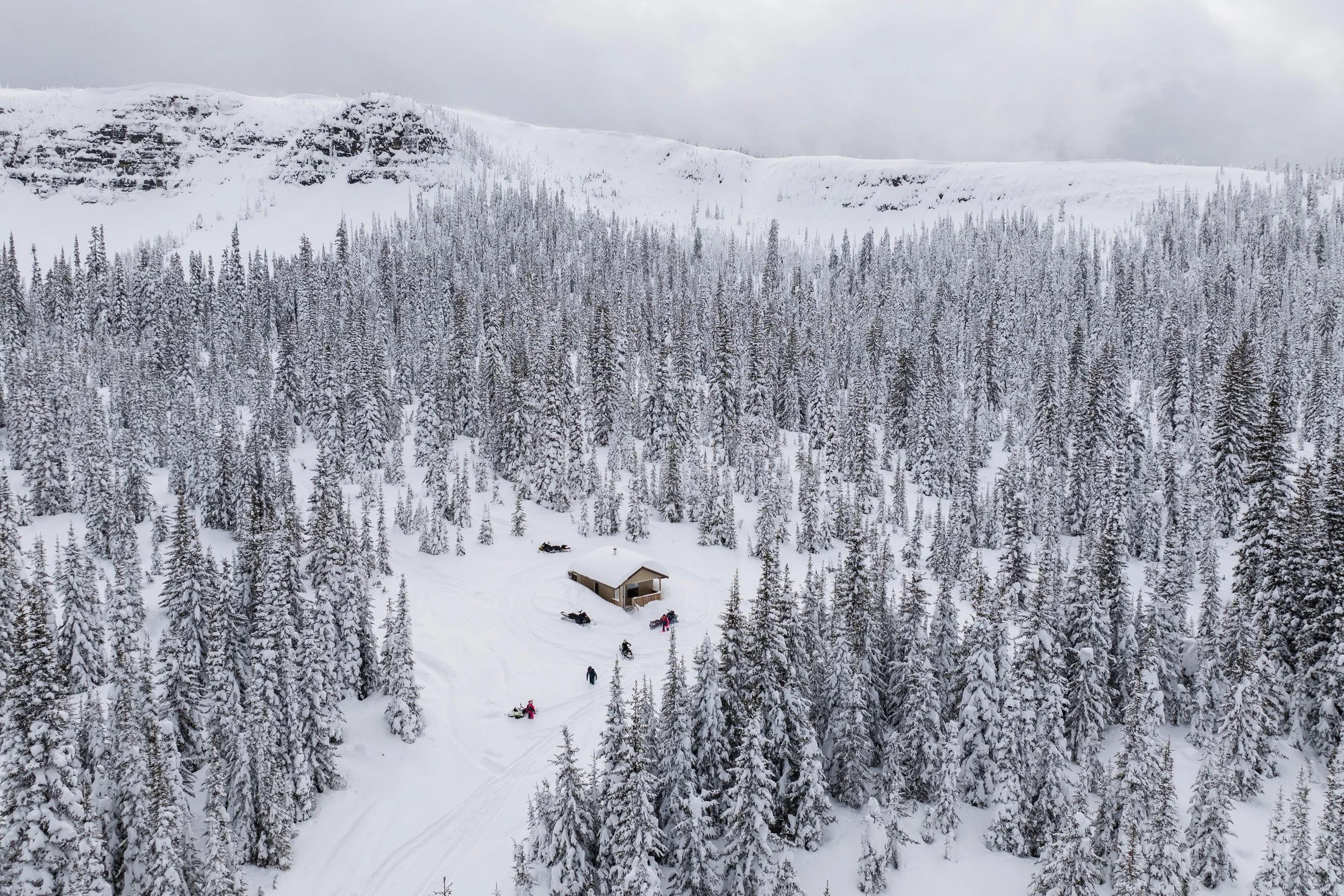
The road to your favourite riding area. The trails your club maintains. The backcountry you've been exploring for years.
Decisions made in Victoria can change all of it.
With BC's provincial election approaching on October 24, the BC Snowmobile Federation (BCSF) put four important questions to political parties and candidates across the province.
Because the future of snowmobiling deserves a place in the conversation.
FOUR ISSUES. FOUR QUESTIONS.
These aren't abstract policy debates. They're decisions that affect where we ride, how our trails are maintained, and whether the next generation will have the same opportunities to explore BC's backcountry.
1. PROTECT BACKCOUNTRY ACCESS
Resource roads are often the only way into recreation areas. When roads are deactivated or bridges removed, access can disappear with them.
We asked: How will you prioritize high-value recreation access and ensure recreation value is assessed before resource roads are deactivated?
2. FUND THE RECREATION SYSTEM
Clubs and volunteers maintain trails, shelters, and recreation infrastructure used by thousands of British Columbians. That work needs sustainable support.
We asked: What actions will you support to strengthen Recreation Sites and Trails BC and provide sustainable funding for community and provincial recreation organizations?
3. GIVE RECREATION A VOICE IN LAND-USE DECISIONS
Forestry, conservation, wildlife, and resource-management decisions all influence where we ride. Recreation needs meaningful consideration before those decisions are made.
We asked: How will you ensure recreation receives meaningful consideration in provincial land-use and natural-resource planning?
4. RECOGNIZE RECREATION AS RURAL INFRASTRUCTURE
Snowmobiling supports rural businesses, jobs, and tourism. The trails, access routes, and facilities behind those experiences are infrastructure worth investing in.
We asked: What role should outdoor recreation play in BC's rural economic and community-development policy, and what actions would you support?
WHAT THE PARTIES SAID
BCSF requested official responses from BC's political parties on these four priorities. Here's a summary of what we received.
CONSERVATIVE PARTY OF BC — OFFICIAL PARTY RESPONSE
The Conservative Party of BC expressed support for responsible backcountry access and opposing unnecessary resource road deactivations and bridge removals.
The party committed to working with recreation organizations to address funding and operational challenges, while giving recreation greater consideration in land-use and resource-management decisions.
It also recognized trails, recreation sites, and backcountry access as important rural infrastructure supporting tourism, local businesses, jobs, and community life.
BC GREEN PARTY — OFFICIAL PARTY RESPONSE
The BC Green Party committed to prioritizing a process to assess recreation value before resource roads are deactivated and to retain important routes for public access where appropriate, including establishing sustainable maintenance responsibilities and funding.
The party proposed a $30 million annual Outdoor Recreation Infrastructure Fund for five years and a 50% increase in combined annual funding for BC Parks and Recreation Sites and Trails BC, from $76 million to $114 million.
The Greens also supported giving recreation organizations a meaningful role in land-use decisions, expanding tourism permitting support, and investing in outdoor recreation as part of rural economic development.
Official written response provided by Lief Douglass, BC Green Party Research Advisor.
ONE BC — NO OFFICIAL PARTY RESPONSE RECEIVED
BCSF contacted OneBC regarding these four priorities. No official party response had been received at the time of publication.
Individual OneBC candidate responses are included below where available.
BC NDP — NO OFFICIAL PARTY RESPONSE RECEIVED
BCSF contacted the BC NDP regarding these four priorities. No official party response had been received at the time of publication.
Individual BC NDP candidate responses are included below where available.
HEAR DIRECTLY FROM THE CANDIDATES
Beyond official party positions, BCSF invited every registered candidate to respond in writing or participate in an interview with BCSF Executive Director Amber Lane.
Some shared detailed proposals. Others offered their perspectives on the challenges facing recreation in BC. Not every candidate responded.
-
Askew did not provide specific answers to the four recreation priorities. She explained that her campaign was focused on affordability, employment and economic development, and healthcare, and that she had received numerous questionnaires. She indicated that, if elected, her office would be able to respond to specific concerns raised by organizations such as the BCSF.
-
Boparai supported considering recreation values before resource roads are deactivated, including working with First Nations, communities, and recreation organizations to identify priority access routes. She advocated predictable funding for volunteer organizations, stronger collaboration with RSTBC, and early consideration of recreation in land-use planning. She also supported recognizing recreation infrastructure as an important rural economic asset and advancing the priorities outlined in BC's Outdoor Recreation Strategy.
-
Courtemanche expressed support for the stewardship work and community contributions of snowmobile clubs, particularly trail and road maintenance that benefits summer access and wildfire emergencies.
He also expressed reservations about the fossil-fuel-powered nature of snowmobiling and indicated a personal preference for non-motorized recreation. He did not provide specific commitments addressing the four priorities.
-
Kinnie supported establishing a consistent provincial process to evaluate recreation value before resource roads are deactivated, including consultation with First Nations, local governments, and recreation organizations.
She highlighted BC Green Party proposals to increase annual funding for BC Parks and Recreation Sites and Trails BC from $76 million to $114 million and establish a $30-million annual Outdoor Recreation Infrastructure Fund for five years.
She also supported early consideration of recreation in land-use planning and recognizing outdoor recreation as an important contributor to rural economies.
-
Kropp acknowledged the importance of backcountry access to families, tourism, and rural employment, drawing on his own experience with snowmobiling and other motorized recreation.
He did not make specific funding or policy commitments, explaining that Conservative leader Lorne Doerkson would be introducing the party's platform throughout the campaign. He anticipated that issues involving rural economies and land use would be addressed in those announcements.
-
Kennedy-Parrott supported giving recreation greater consideration in land-use decisions, including the long-term impacts of industrial development on recreation and tourism. She highlighted BC Green proposals to increase annual BC Parks and RSTBC funding to $114 million and establish a $30-million annual Outdoor Recreation Infrastructure Fund for five years. She also supported strengthening rural tourism economies through investment in local businesses, workforce development, housing, and recreation infrastructure.
-
Larochelle supported considering year-round recreation values before resource-development decisions are made and suggested assessing those values during forestry planning.
She referenced BC Green Party commitments to increased recreation funding, including the proposed $30-million annual Outdoor Recreation Infrastructure Fund. She also expressed support for base funding to reduce the financial burden on volunteer clubs and for greater inclusion of recreation in land-use decisions.
Larochelle emphasized that snowmobile clubs provide social infrastructure and that recreation's benefits extend to community wellbeing, tourism, and rural development.
-
Michell emphasized the importance of responsible public access to BC's backcountry and greater accountability in resource management. They expressed concern about resource road deactivations and supported maintaining access for recreation, wildfire response, and public safety. Michell advocated for modest government funding to support volunteer recreation organizations and committed to discussing their resource needs with BCSF. They also highlighted the role of recreational users in environmental monitoring, rural economies, and identifying issues on the land.
-
Nordine committed to opposing resource-road deactivation and advocated transitioning high-value industrial roads into permanent recreation assets.
He specifically proposed transforming Gillard Forest Service Road into a maintained route connecting recreation opportunities in the Kelowna area.
His other proposals included redirecting road-deactivation funding toward recreation maintenance, reducing administrative barriers for clubs, allocating a portion of fuel-tax revenue to recreation infrastructure, and recognizing trails and staging areas as essential rural infrastructure.
-
Roy expressed strong personal support for the BCSF and its work, citing his background in hunting, ATV recreation, backcountry camping, and volunteer involvement with an ATV club.
He did not provide specific responses or policy commitments addressing the four priorities.
-
Russell committed to establishing a local recreation access advisory working group to identify resource roads at risk of deactivation and assess their recreation, tourism, and community value, potentially serving as a provincial model. He advocated stable, multi-year funding for RSTBC and volunteer organizations, transparent consideration of recreation in land-use decisions, and recognizing recreation infrastructure within BC's rural development strategy. He also emphasized practical, locally directed investments and the importance of including recreation in provincial rural policy.
-
Sahota emphasized the importance of including recreation stakeholders in decisions affecting resource road access and land-use planning, with Indigenous peoples playing a leading role. They supported greater government investment in recreation infrastructure, highlighting opportunities to leverage volunteer contributions and improve public health. Sahota also recognized outdoor recreation's economic and environmental value to rural communities and highlighted the BC Green Party's position on ending old-growth logging and supporting more sustainable forestry practices.
-
Scott supported developing a provincial consultation process to determine where maintaining backcountry access serves the public interest.
He also supported stable funding for organizations maintaining recreation infrastructure, greater consideration of recreation following resource extraction, and responsible maintenance of recreation assets.
On rural economic development, Scott expressed support for preserving outdoor recreation opportunities while acknowledging that he would need to learn more before identifying specific policy actions.
-
Spurling supported a comprehensive plan to transition industrial roads into recreation assets, beginning with stronger consultation before deactivation decisions.
She supported increased funding for volunteer organizations and suggested a task force to identify opportunities for additional support.
She also advocated including recreation organizations in land-use planning and recognizing recreation infrastructure as part of rural community development, citing the community connections created by multi-use trails in Logan Lake.
-
Thiele supported considering recreation value before resource roads are closed and improving consultation with recreation organizations and communities.
He also supported reviewing funding for volunteer recreation organizations, involving recreation groups earlier in land-use decisions, and recognizing outdoor recreation as an important contributor to rural tourism, employment, and quality of life.
His response emphasized practical measures and responsible public funding but did not identify specific funding amounts.
-
Visscher supported establishing a provincial process to assess recreation, emergency access, and community values before resource roads are deactivated. He also advocated provincial funding to maintain high-value roads retained for public use.
He highlighted BC Green Party proposals to increase funding for parks, trails, and recreation sites to $114 million and establish a $30-million annual Outdoor Recreation Infrastructure Fund for five years.
Visscher supported including recreation organizations in land-use planning from the outset, while acknowledging the need to balance recreation with wildlife and conservation priorities. He also advocated recognizing recreation as core rural infrastructure.
Candidates are listed alphabetically by surname. BCSF is nonpartisan and does not endorse political parties or candidates. Summaries reflect responses received, with original submissions and recordings linked where available. The absence of a response should not be interpreted as a candidate's position.
YOUR VOTE IS JUST THE BEGINNING
The decisions shaping snowmobiling don't stop on election day. Neither should our involvement.
BCSF will continue bringing the priorities of riders and clubs to provincial decision-makers. But a stronger voice for snowmobiling starts with people who know the issues and are willing to speak up.
Know the issues. Ask questions. Vote. Stay engaged.
Your trails. Your access. Your voice. Make it count.
Advance voting: October 16–21, 2026
Election Day: Saturday, October 24, 2026
Find voting locations, registration information, and voting options at Elections BC.